
The Shutdown Has Been Shut Down Edition
Leaky talent pipelines, the non-relegation doctrine, Grover Cleveland, and Jade Plants!

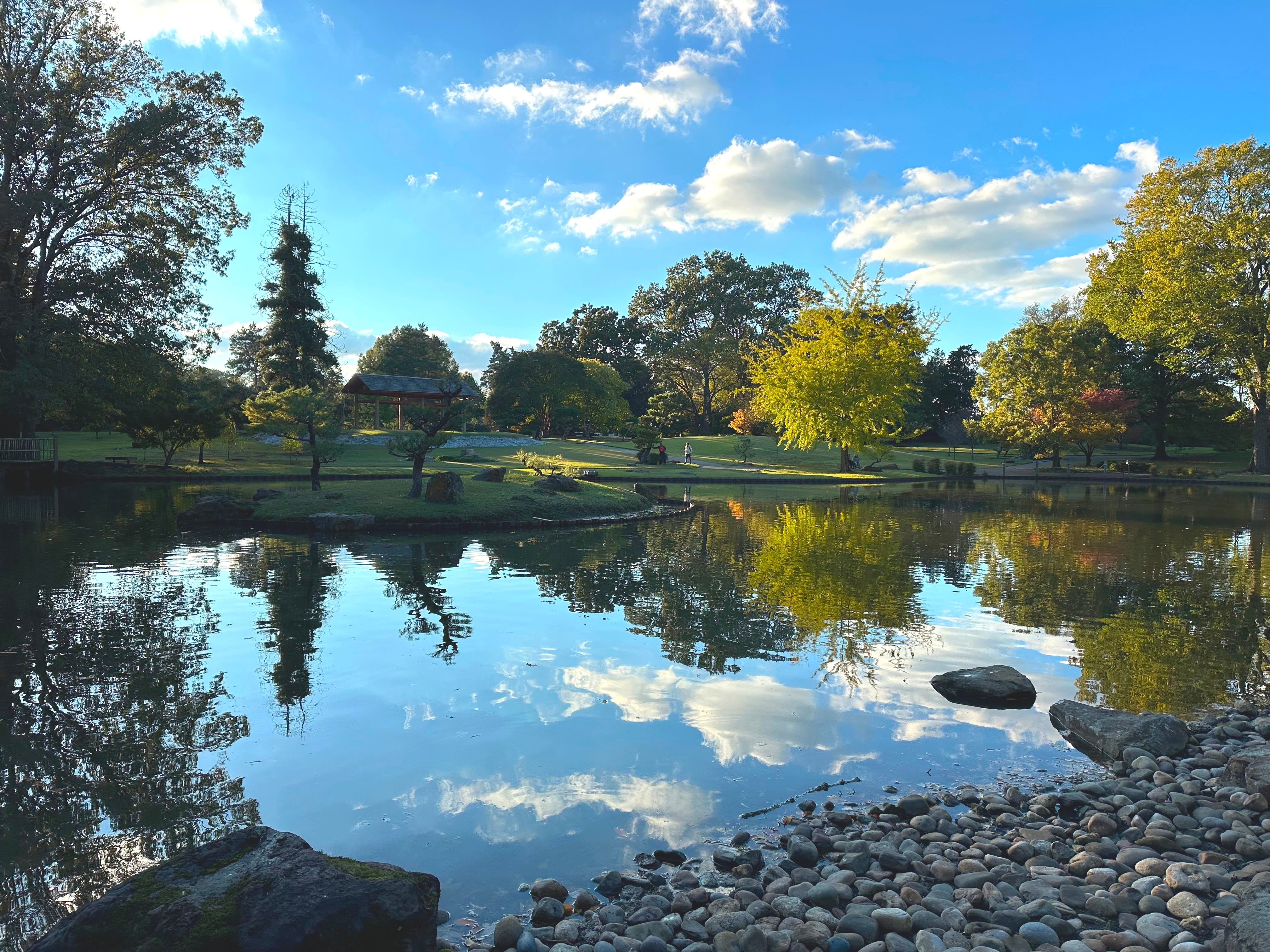
Sunset over the koi and turtle pond in the Japanese gardens at the Memphis Botanical Garden
The blast of cold air over the past few days was a bracing reminder that winter is coming. Fortunately, it appears to be warming up (and should last for a few days), but soon winter will be in full swing. But hey, spring and summer wouldn’t be as wonderful without the contrast of winter weather!
I’ve stumbled across lots of interesting items that made me think over the past two weeks, which I share below. Hope you find them to be interesting, too!
Something Short (and Long!)
I highly recommend the new Fordham Institute report by Stéphane Lavertu from Ohio State. Prof,. Lavertu studied the college-going outcomes of high-ability, low-income (HALO) students in Ohio. His data allowed him to identify those students in 3rd grade then determine their college attendance a decade later. That’s the long piece in this issue!
The short piece this week is a commentary I wrote on the report, which you can access immediately below (if clicking below doesn’t work, try this link). It’s a great, detailed study, and the take-aways are clear and actionable.

I also want to take the time to thank the Fordham Institute for their continued support. I interact with think tanks on a regular basis and hear lots of comments along the lines of, “We believe in debate!” Yet what they mean is, “We believe in debate if you agree with us!” That has never been my experience with the Fordham team - they love to mix it up, and their debates all occur in good faith. They also have been one of the few prominent think tanks that maintains a focus on advanced education, often going out of their way to commission important studies. These include Stéphane’s excellent report and the work of the National Working Group on Advanced Education, but I could list many other important projects. So to Mike, Checker, Amber, Brandon, and the rest of the Fordham team (including several former students!), a heartfelt thank you for your support and continued commitment to helping advanced learners.
Some Things that Intrigued Me
Shutdown previews world without U.S. ED? This AP article draws parallels between the impact of the shutdown on K-12 schools and the impact of shutting the Department of Education (ED) permanently. It’s interesting, but it doesn’t 100% work for me, in part because the administration still hasn’t defined what “sending education back to the states” means. Cutting lots of federal red tape? Cutting all federal education funding for states and schools? Keeping most federal education programs but moving them to new agencies? The answers from the administration have ranged from “Maybe?” to “Yes?” with lots of permutations in between. All of the debates over a possible shutdown are unproductive because everyone’s definition of “shutting down ED” is different. The debate would be more productive if we had a solid proposal for what the administration intends. I’m open to the argument that the ambiguity is intentional, because everyone on all sides of the debate can interpret “shutting ED down” as they see fit. That may be good politics, but it’s bad policymaking.
Gorsuch SCOTUS hearing comments. The Daily podcast had a good episode about the SCOTUS tariff case last week. Particularly interesting were sound bites of Justice Gorsuch questioning the Solicitor General (representing the Trump administration) about the non-delegation doctrine. As I understand it, that doctrine states that Congress can’t give away its constitutional authority to the president, even on a temporary basis, because once done it can never be undone. For example, if Congress decides to let a president declare war, it would be nearly impossible for Congress to get that constitutional power back: Any president would veto the bill calling for the return. A supermajority would be needed to overturn the veto, which is impractical. This struck me as super interesting and a decent explanation for how the executive branch has slowly and steadily assumed many congressional powers.
This led me to think about the reasonable response that the president has to have additional powers because Congress can never gets it act together. Sure, but here’s an alternative theory: Congress is often ineffective because much of its power has been taken away. If it were still the primary branch of government, would we be seeing more serious governance on Capitol Hill? If Congress still controlled involvement in foreign military conflicts, federal spending, trade policy, etc., would we be sending different people to DC to represent us (and, relatedly, would we tolerate gerrymandering to the current extent)? Food for thought!
More jingle-jangle! Loyal reader Olivier Chabot called my attention to this podcast episode about the danger of construct proliferation in psychology research. I know this is a nerdy topic, but anyone conducting research in the social sciences needs to be thinking about this.
Pardons, pardons, everywhere! Good grief, some of these federal pardons are outrageous. Even if you ignore the crimes being excused, many of the pardonees owed victims a lot of money; my understanding is that the perpetrators are off the hook for that now. George Santos should have spent the rest of his life paying back the people he defrauded, and we should have been spared from ever hearing about him again. Tough luck for all of us, I guess, but especially his victims.
Some Things That Interested Me
Dementia caregivers. As some of you know, my mother has Alzheimer’s and receives full-time care in a memory-care facility. My dad is doing a great job providing support and ensuring that she’s comfortable and safe. It’s been trying for all involved, especially for my dad, but it has also brought us closer together as an extended family. It is also touching to see so many family members and friends step up to provide support. But damn, this isn’t fun. So it was with great personal interest that I read this article in a Hopkins magazine on a classic book on caregiving for dementia patients, now in a new 8th edition. It may be of interest to other families going through the same thing.
Grover Cleveland. I’m an avid consumer of presidential biographies, having made it through 26 of the 45. I admit to reading only brief overviews of those who didn’t excite me, and Cleveland is one of them (although, oddly, I’ve read two books about him). I recently crossed paths with Grover again while working through Forgotten Presidents. It’s more academic than other treatments, with a tight focus on presidents’ constitutional impacts. Cleveland gets two chapters, one for each term. The chapter on the second term is really surprising due to the similarities between Cleveland’s actions and what is happening now with the only other president to serve non-consecutive terms. For example, Cleveland came into his second term with a completely different, much more assertive (some say aggressive) mindset. He was more muscular in his actions, both domestic and foreign. He sent troops into Chicago to quell perceived unrest over the strenuous objections of the Illinois governor … and the Supreme Court supported Cleveland. There are many other parallels, which I keep in mind every time I hear a pundit say about the current situation, “No president has ever done this before.” Well, actually, that’s not 100% accurate, and the fact that the two non-consecutive two-termers are similar in so many ways is a little spooky.
Great quote. Recently saw this comment, which has been around for a while but always makes me chuckle: Everything is a conspiracy if you never care to find out how anything works.
Jade Plant of the Month
It’s the time of year when I plant “starter jades.” These are generally small plants that started growing over the summer after a healthy leaf fell off a plant. Most of those leaves dry up pretty quickly, but some start growing roots. They don’t need soil or water right away, and I usually wait a month or two to see if they start growing on their own. These four did!
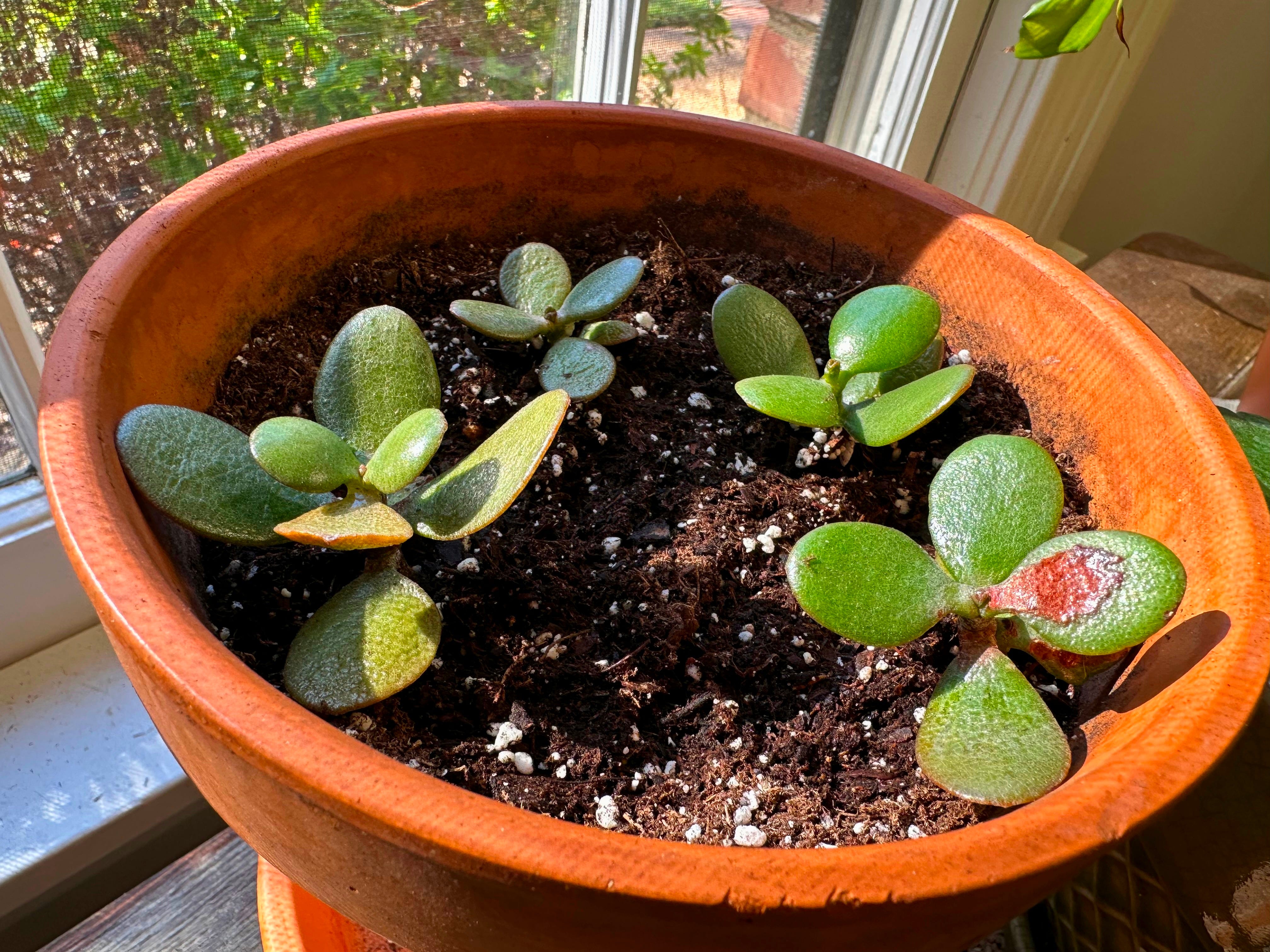
Probably better to do the planting in the spring, but I’ve had good results getting them started in the fall so the roots are set in time for a big burst of growth as the days get warmer and longer. Let’s do a little time-lapse here: I’ll post updates every few months so you can see how much these four grow!
Where to Find Me
email: jplucker@jhu.edu
http://Amazon.com/author/jonathanplucker
Thanks for the mention. Glad you liked it.
Here's a quote that only somewhat diverges from your note about the weather. In remembering that winter helps us appreciate spring, I was reminded of Keats:
Ay, in the very temple of Delight
Veil'd Melancholy has her sovran shrine,
Though seen of none save him whose strenuous tongue
Can burst Joy's grape against his palate fine;
Ode on Melancholy https://www.poetryfoundation.org/poems/44478/ode-on-melancholy