
Gratitude Edition
So much to be thankful for!

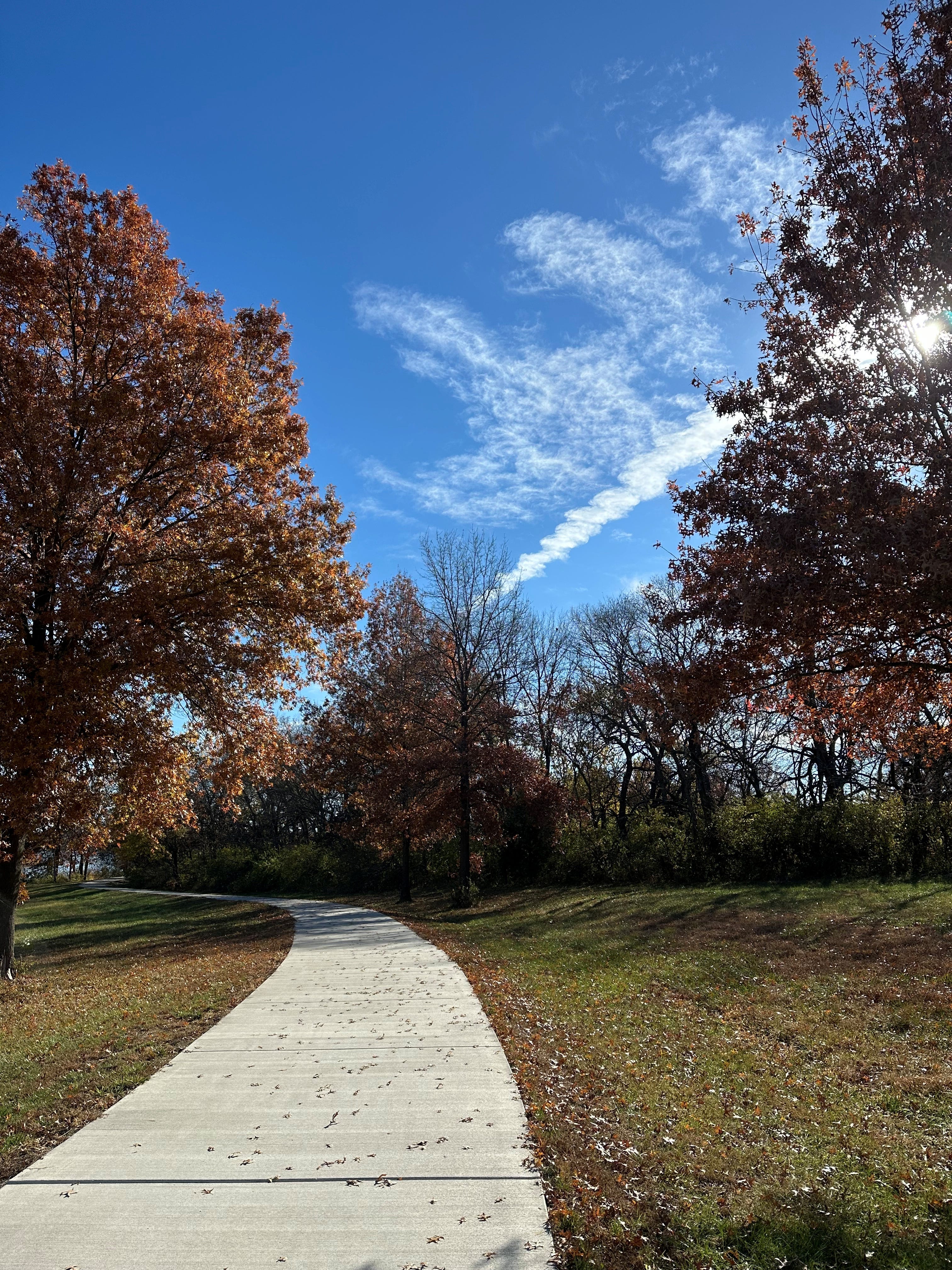
A beautiful Sunday morning in Kansas City
What a busy couple of weeks! As I’ve hopscotched across the country for work, a fun side trip, and family time, it has been great to see so many friends, colleagues, and relatives.
The first trip was to Pittsburgh for the annual convention of the National Association for Gifted Children. Our sessions went well, and it was great fun to celebrate several friends who received awards for their work with students, families, and educators. All are deserving recipients, and I was especially happy to see close colleagues receive awards: Sneha Shah-Coltrane was the recipient of the Belin Advocacy Award, Joy Lawson Davis received the Distinguished Service Award, and Tyler Clark was honored with the Early Leader Award.
I’ll write more about the NAGC sessions in future issues, but suffice it to say that the energy at the conference was inspiring. I’ve mentioned previously that it feels like the field of advanced/gifted education is getting some wind to its back for the first time in many years, and it will be interesting to see if advocates can capitalize on this change.
On the way back to Baltimore/DC from the conference, I made a somewhat last minute decision to stop briefly in Kansas City to run a half marathon (hence the photo above). It was run along Longview Lake just southwest of the city, with perfect running weather. I was exhausted from the convention and late arrival/early wake-up, but after a slow start rallied for a new PR. Then off to the airport for a couple days on campus, then back to Memphis to repack and head to New England for Thanksgiving. Whew! Still not recovered from all the travel, but at least I can eat “Thanksgiving leftover sandwiches” for the next few days! I hope you all had good visits with friends and family and some relaxing down time.
Personally, after a rough year for our nuclear and extended families, it was helpful to put serious time into putting the year in proper context. Yes, it’s been bumpy … but it’s also been great in many ways. Lots of loss, but lots of positive developments, too. And I am deeply grateful for my family, friends, and colleagues, who are wonderful people that I cherish (and learn from!) more than I can put into words. I am thankful for you!
This issue was mostly roughed out last week, but a LOT of stuff happened the past few days, so I pushed some topics to the next issue. Best wishes for a great start to your holiday season!
Something Short
My colleague, Amber Esping, has published a book with Jess Mercer on 2018 Paradise (CA) Camp Fire. As you may recall, the fire destroyed the entire community, with far too much loss of life and near-total destruction of both Paradise and surrounding towns. See a harrowing photo here.
As you can imagine, the impact on the region’s schools was catastrophic. Amber, whose extended family lives in Paradise, spent years visiting the town and interviewing residents. In this book, she weaves together their stories to create a narrative about what happened and how the community - with a focus on educators and students - are bouncing back.
The book is highly compelling, and it made me consider how schools and communities can recover from tragedies such as this (e.g., pandemics). It’s also a first-rate piece of qualitative scholarship. I admit to being a little dismissive of much qualitative scholarship in education, but this strikes me as an example of the power of those methods in the hands of a highly-skilled, deeply knowledgeable researcher. The stories and lessons-learned really jump off the page. I can’t recommend this book highly enough!
(Full disclosure: I have a minor COI here, as I’m the series editor for the publisher. Which means I get about a nickel, if that, for every copy purchased.)
Something Long
This piece from Noah Smith has a million implications for discussions about advanced education and K-12 education in general. Although I quibble with some of the details, his argument feels directionally correct. As noted in another item below, I suspect he’s overinterpreting the bombshell report about math remediation at UCSD, but it leads him to explore other important issues (not dissimilar to ideas Mike Petrilli recently shared). Definitely worth a read and a think.

#/media/File:Camp_Fire_oli_2018312_Landsat.jpg)
Some Things that Intrigued Me
UCSD remedial math story. This one exploded on the socials, and as I write this the day after Thanksgiving, new data are reigniting the discussion. Although I would *love* to say that this is the result of a continued lowering of academic standards (accompanied by grade inflation), eschewing rigor and advanced learning for minimum competency, and the crazy approach to K-12 math ed in California … I can’t say any of those things based on these data. My take: UCSD lowered admissions standards, and as a result, students needing remedial math went from 1% to 12.5%. Not good (especially with an acceptance rate south of 10%!) but totally predictable. Could all of the factors listed above also be part of this? Absolutely! And almost certainly! But the main cause was an admissions change. Additional point: The remediation rates for writing are considerably worse, yet that’s rarely being discussed.
AI cheating scandal. This NYT story about the University of Illinois AI cheating scandal is a weird mix of funny, totally unsurprising, and depressing. Long story short: Two professors caught a LOT of students using AI to cheat. Then they were flooded with apology emails from the students … who appear to have used AI to write the messages. Sweet petunia, this is getting ridiculous! Here’s some advice I once gave a student who screwed up big-time with a professor:
Apologize in-person. Dress professionally.
Admit everything (they probably know it all, so partial admissions come across as insincerity). No excuses, just very poor judgment on your part, no lack of respect was intended, etc.
Make it clear that you don’t expect any leniency, but you just wanted them to know it will never happen again, with them or anyone else.
Will that be a fun conversation? I’ve been on both sides of it, and it isn’t going to be the best meeting of your life. Maybe the consequences are lessened, maybe they’re not. But at least you know you handled it like an adult.
President Ryan’s message. Wow, this is quite the story. I’m not sure the headline is fair. Essentially, he’s wondering if what he was told - that the Trump administration wanted him out or the university would be besieged by the feds - was accurate. That’s an interesting dilemma, as there’s no way to verify such information. In other words, if you’re meeting with your bosses and they say the feds told them that you have to go, you can’t really call the feds to check. So you take it on face value. This situation is further complicated by the fact that the feds may be spinning things, too. The end result, though, is the same: A popular (and not exactly liberal firebrand) president got fired. Worth noting: Not the first president at my alma mater to be forced out in recent years, both times at least partially due to conflicts with the governing board.
Richard Cash’s new book! My colleague and friend Richard Cash has a new book, Strategies and Tools for Self-Regulation in the Classroom: Boost Student Focus and Meet Learning Goals. Richard is a very experienced (and very effective) leader of professional learning on differentiation strategies and self-regulation, among other topics, and his materials are always highly reviewed by teachers.
Some Things That Interested Me

The Warhol Museum. While in Pittsburgh, it seemed silly not to visit the Warhol Museum, if only briefly. Fortunately, it’s open late on Fridays (and less than half price at that time!). Some of his art works for me, some of it doesn’t. But the museum does a good job of putting his work into a helpful personal and social context, which I enjoyed. For example, he was born to a working class, immigrant family, the youngest of three boys. For whatever reason, his mother was extremely supportive of his desire to pursue an artistic career, and she was one of his closest assistants for the first 20 years of his career. I also didn’t know that he was a very successful commercial artist in NYC before being the “Andy Warhol” that we all know today. Of his many self-portraits, this one worked the best for me, as it captures my sense that he was both knowable and unknowable (by design!).
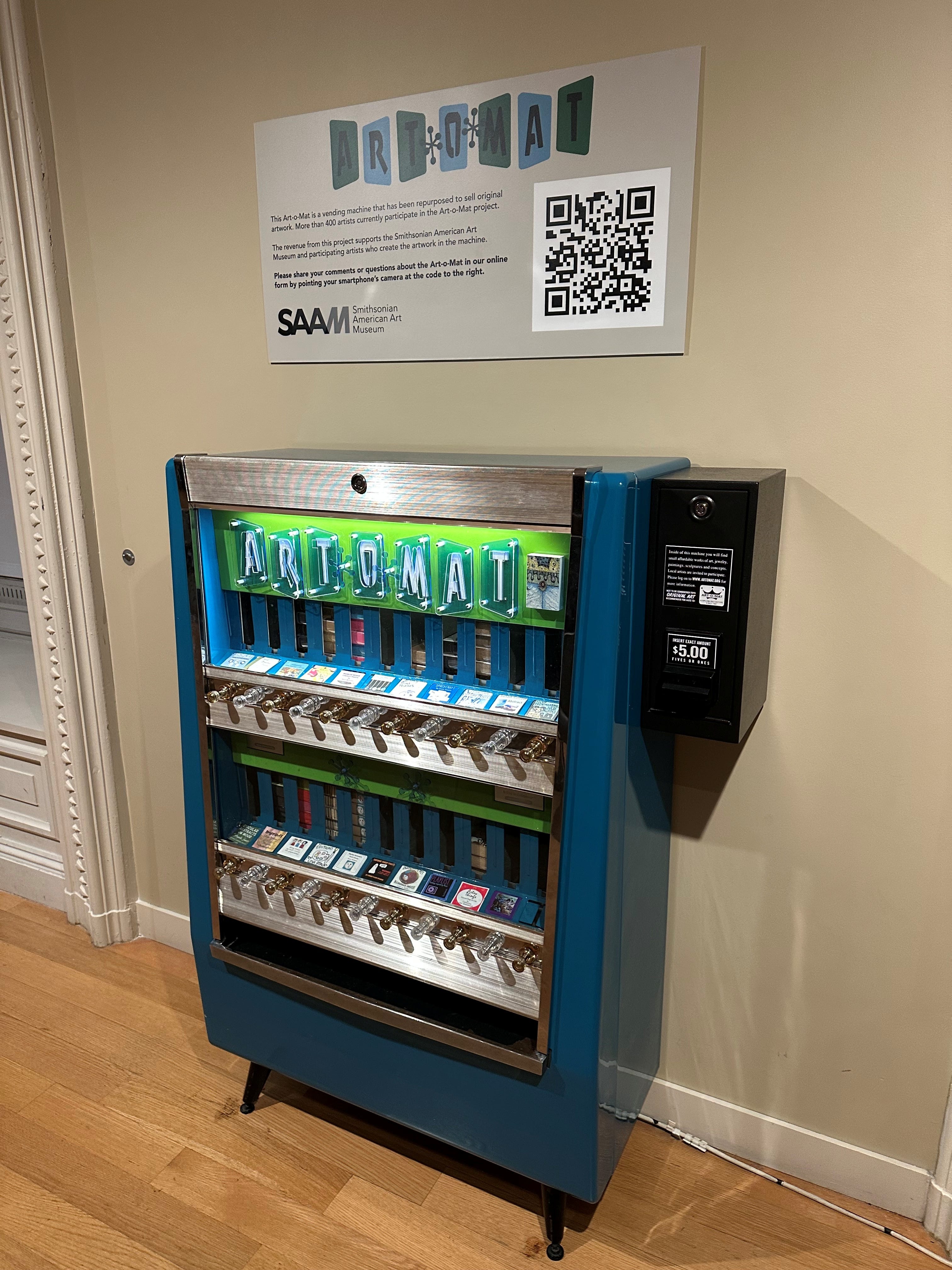
Art-O-Mat! I went from KC straight to DC for work, which just happened to be the day that Smithsonian museums reopened. I made a quick trip to the National Portrait Gallery/American Art Museum and stumbled across the Art-O-Mat machine. I love the concept! For $5, you can select a miniature piece of art or jewelry. Apparently they have these machines all over the country, but this is the first time I’ve seen one of the machines. They are especially plentiful in North Carolina, so no excuse for my Tar Heel friends not to visit one. I bought some art and will return again soon. What a great concept!
Jade Plant of the Month
I’ve spotted some great jades during my recent travels, and I’ll share some pics in the next issue. But Thanksgiving week was the time of “The Great Jade Replanting of 2025.” I planted or replanted about 20 of my green babies, started a half dozen cuttings, and prepped many for friends and family. Yes, I did this in the kitchen (a little too cold and wet outside this year) but cleared most of it away in time for Thanksgiving dinner!

Where to Find Me
email: jplucker@jhu.edu
http://Amazon.com/author/jonathanplucker
"local school board elections are usually dominated by upper-income white voters, while the degradation of educational standards tends to impact disadvantaged minorities more." (Noah Smith article)
I would say that Michigan has been a prime example in the degradation of educational standards, going from above average in the 1990s to one of the lowest ranked states currently. And personally watched our area of 'upper-income white voters' collapse academically. I would put the reasons as pride, distortion, and apathy.
For pride, in a recent poll 43% of US adults gave their local public schools an A or B, but only 13% gave public schools nationally an A or B. Who is going admit that they moved into a bad school district or that the nice teacher their child has isn't a great educator? Better to have delusion in the excellence of the community and keep school pride than face bitter truths than admit you've placed your child in failure.
For distortion, I watch my own 'premier' (rather wealthy) district only provide the results that make them look good. Graphs compare us to state and county averages instead of districts with similar demographics. Average student growth is presented, but top 10% growth isn't. (The one time it was, 83% of the top 10% hadn't made a year's worth of growth.) If all information was presented, there would likely be administrators losing their jobs.
For apathy, we white parents as a group are extremely apathetic towards education. We know our kids got a (demographically-enhanced) above average education, that their white skin and white names will help them land decent jobs, and that we would rather them be happy than successful. Including in school, so make it easy and enjoyable rather than rigorous and stressful. Even if the entire state's education is falling apart, the white advantage remains in society and the white majority remains in political positions of power. And at least on my district's BOE, the majority of trustees are more concerned with the social issues that factor into education than academics, which I would consider another form of apathy in education. In a state where union blue collar workers often make more than non-union white collar workers, apathy towards education is quite accepted.
Those are the main factors I see in Michigan's decline in education. For other states, I'm sure at least some of those apply and other factors too.
There are plenty of secondary factors, like changing leadership in a purple state means long term education plans get tossed and replaced every few years. Or that only two of Michigan's universities are selective, so you don't need a good K-12 education to go to a good college. Or that Michigan doesn't have enough high skill jobs to hire our current population of high skill workers.
But it did encourage me and my daughter to get into working to make a difference in education because every failure is an opportunity to make a change for the better!
The UVA story reminds me of a Michigan school district's Board of Education who wants a popular superintendent gone without having to actually fire him and pay out his contract. So an anonymous allegation was presented and the BOE claims not to even know the content of allegation, but they voted 4-3 to put him on paid administrative leave.
There is a lot to dislike about how Trump handles things, but he is usually very brazen about what he wants, so I doubt he was the one wanting Ryan gone. But if Harmeet Dhillon or another DOJ official wanted Ryan gone, they could have told the UVA board that, knowing that they would also need to deny telling the UVA board that or be fired by Trump. Trump doesn't seem to tolerate 'his' government employees going rogue.