
AMAZING SEMIQUINCENTENNIAL EDITION!
Ed policy, Baltimore's public safety turnaround, ... and Things You Missed in 1976

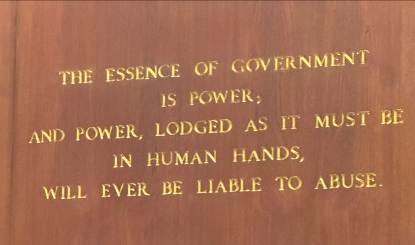
James Madison quote displayed in the Madison Building of the Library of Congress (best view of any cafeteria in DC!)
Although I’m still disappointed at the lack of fanfare surrounding the 250th, I admit to a personal bias: It really wasn’t that bad, but it just doesn’t compare to the Bicentennial celebrations 50 years ago. So … USA! USA! USA! But also … we could have done better. For those of you who will be around for the Tricentennial: Do better than we did this time around. Regardless, check out my highly biased list of awesome things from 1976!
A special request: We’re still looking for a principal or superintendent who has experience with moving high school start times later in the morning. Several of you provided leads last summer, but most didn’t pan out and we really need just one more person to share some insights before we can publish our policy brief on the topic. Please email me at jplucker@jhu.edu with any leads. Much appreciated!
Something Short and Important
The publication of two recent pieces on gifted education by Katie Arnold-Ratliff and Matt Yglesias has tongues wagging, and I’ve been asked by several outlets and colleagues to jump into the fray. I’m tempted but have bigger fish to fry right now. Fortunately, Mike Petrilli wrote a good short piece on the public debate, pointing to some paths forward, too. He lands pretty much where I am on the whole brouhaha.
As a field, I think we need to continue acknowledging the substantial shortcomings of traditional approaches to gifted education. That includes our terminology, a weaker-than-it-should-be theoretical base, poor program design, and the utter lack of training for educators on advanced learning. We can do better (and are doing better!) in all of these areas, and we need to keep pushing.
Something Short and Fun
I don’t know why they reached out to me, but Huff Post asked for some thoughts on the 250th compared to the 200th. They only shared some of what I sent them, but still a fun little story. I was worried that my comments weren’t positive enough, but then I read the others’ input!
In Response to a Common Question …
The question that I get more than any other - from family, friends, and even some colleagues - is “What do you really do for work?” I get it, being a professor, researcher, and semi-public intellectual is weird!
My team has been very fortunate to have a donor support our work since not long after I arrived at the Hopkins School of Education. Dr. Lisa Egbuonu-Davis continues to help us as we strive to provide advanced learning opportunities to as many students as possible, and Hopkins recently interviewed us about the work. I planned to put serious preparation into my interview … but then life intervened and I had to wing it. As I waited for the interview to start, I decided to answer a simple question regardless of what they asked me: What is all this work really about? To my surprise, that response became the opening voiceover.
Stats of the Week
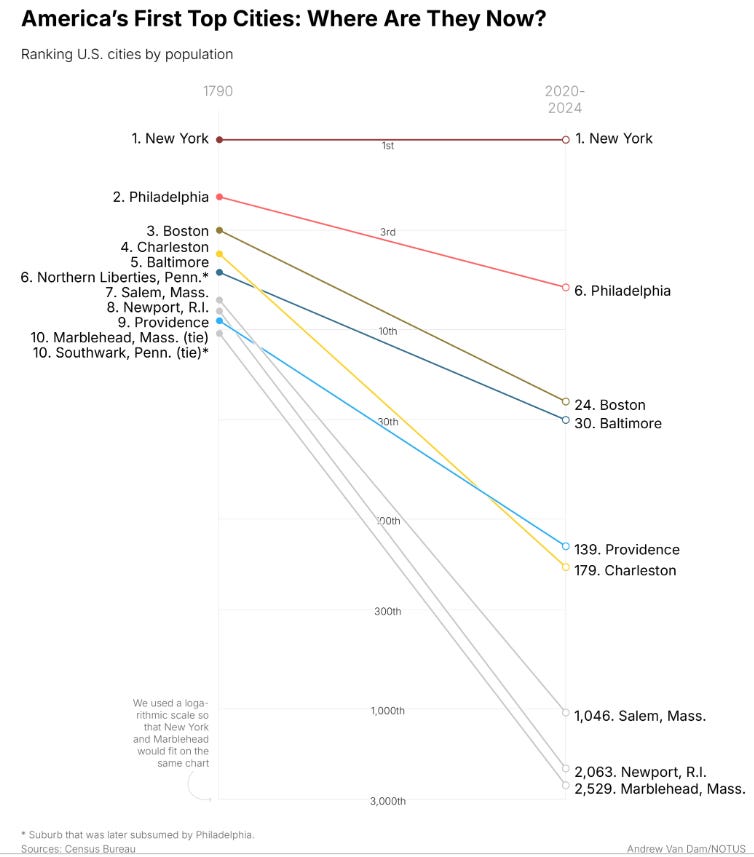
Check out this very cool examination of the country’s biggest cities over the past 250 years. There is a lot here! The full article on NOTUS is very detailed and fun to think about. You’ll probably need to create a free account to see all the charts and maps. It’s worth it!
Some Things That Intrigued Me
What would a Trumpy, Democratic administration look like? I ponder this question a lot, and the answer has critically important implications as we get the country back on track. But most of the responses thus far feel like versions of, “We’ll be just as bad but will favor our people!” That’s not a good response to that question. So this Dana Milbank column was of great interest to me and didn’t disappoint. Essentially, the center-left needs to figure out what they would do with a presidency in an age of unitary executive theory.
Too many students aren’t in school. Absenteeism in K-12 schools remains highly problematic. Yes, rates are falling, but they remain way too high. AEI continues to do some of the best work in this space, and they recently launched a cool new tool. I haven’t played with it that much yet, but consider giving that team’s work a look.
Public policy in Baltimore. It’s no secret that Baltimore is not my favorite city. When I started working there a decade ago, it was in very rough shape - and quite dangerous. It’s made great strides, and the current mayor gets a lot of credit for it. This Free Press piece provides some insights into the city’s turnaround, and there are public policy lessons in here.

Things You Missed in 1976
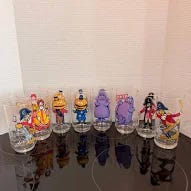
The first Egg McMuffin plus McDonaldland glasses: The McMuffin was a revelation, and everyone grabbed those glasses! I can’t find a photo of the 1976 versions, but the 1977 series was probably the most popular:
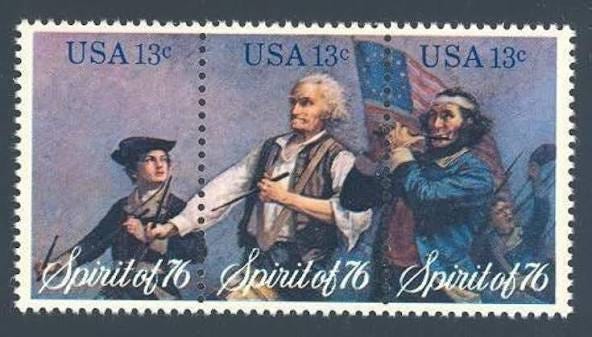
Bicentennial stamps: Remember mail? You would stick stamps on an envelope and somebody would pick it up from your house then magically deliver it to someone else. Well, in 1975 and 1976, the USPS upped its stamp game and produced tons of awesome, celebratory stamps for the Bicentennial.
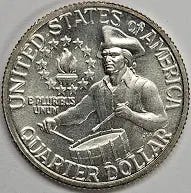
Bicentennial quarters: Remember coins? Although a great uncle’s prediction that, “Bicentennial quarters will be worth a lot of money one day,” proved incorrect, we were all still fascinated by the U.S. Mint producing a different coin. That was unheard of back then!
Washington promoted to six stars: Yes, Gen. Washington was posthumously promoted to six-star general. Fitting and cool.
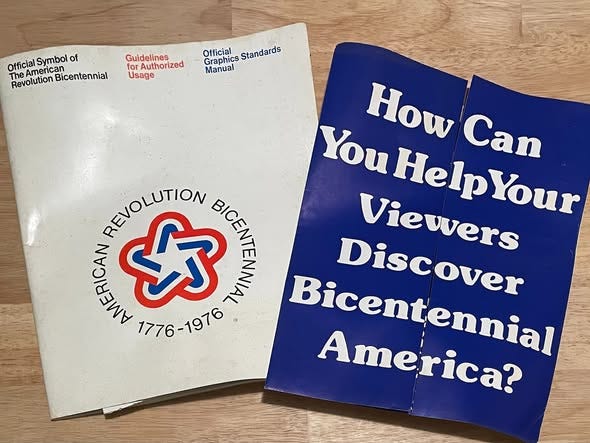
Cool logo: The 1976 logo, IMHO, was better than the 250 logo. See below.
The National Air and Space Museum: One of the world’s great museums, and one that fascinated me as a child, opened on July 1, 1976.
Mars: Two Viking landers touched down on the surface of Mars in 1976. We’d recently stopped moon landings, but “space fever” was still a thing in the bicentennial year.
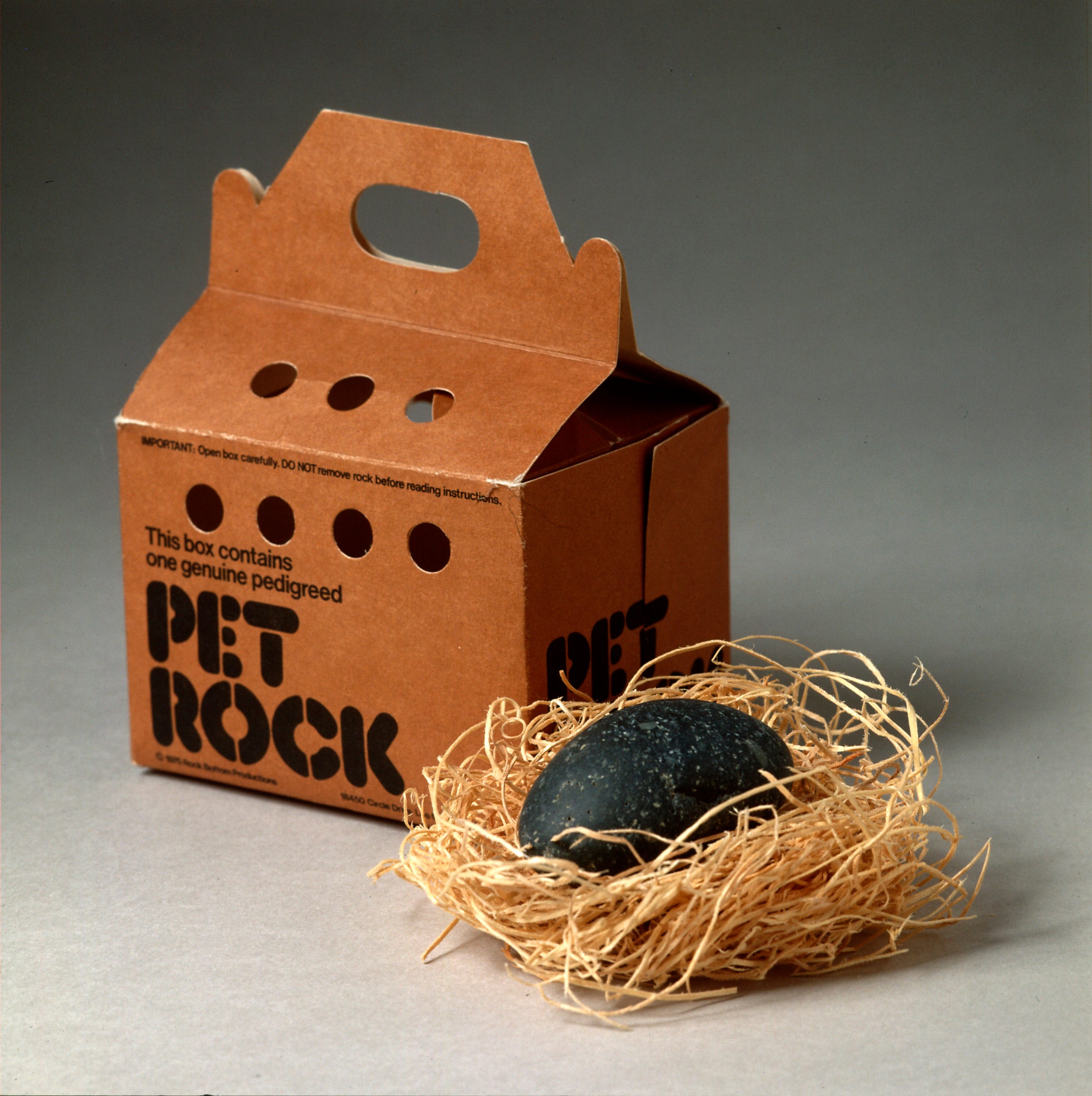
The pet rock: Seriously, this was a thing. We visited one of my dad’s colleagues that summer, and the guy had an official Pet Rock. I was in awe and remember it like it was yesterday.
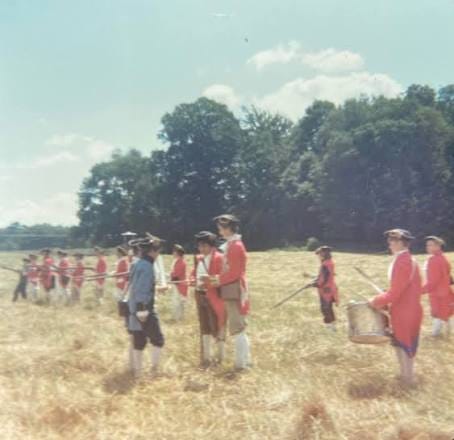
Reenactments: Americans reenacted everything that summer! Revolutionary War battles, Civil War battles, Washington crossing the Delaware. If people could dress up and pretend they were fighting someone, they did it.
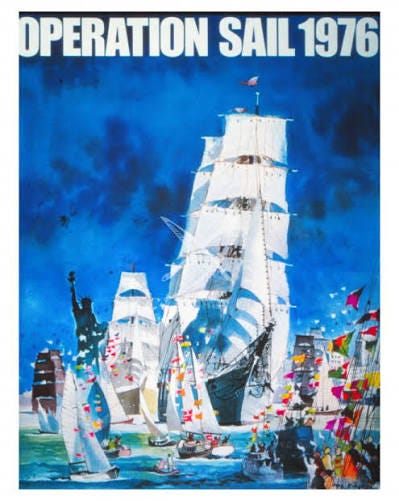
Operation Sail: Seeing the “tall ships” sail up the East Coast was a big deal. I’ve been told they did a similar thing this year, but I’ve seen no mention of it.
Parades: Someone who came of age later than about 1985 would be forgiven for not knowing how much Americans loved parades back in the day. Even in my small New England town, we had parades on most major holidays. 1976 may have been peak parade. It was glorious.
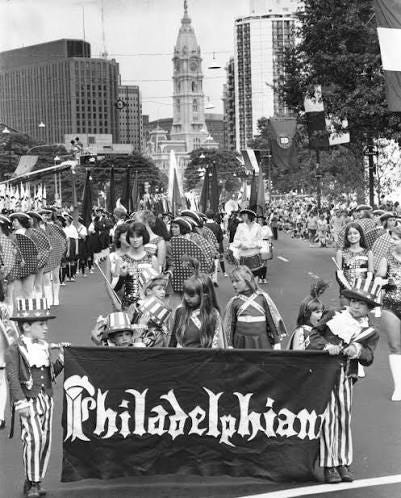
Tons of stuff like this:
My only quibble with this is that we did have full color films back in 1976. Granted, my family was still watching a 10-inch B&W television, as were most of my friends’ families, but still.